




Dulce de Leche Cheesecake: Keep the Caramel Deep and the Filling Clean
Dulce de leche cheesecake has two rich components competing for attention. Cheesecake brings dairy, eggs and a dense texture; dulce de leche adds cooked-milk caramel flavor and more sweetness. The dessert we once wrote about at The Cafe in Ames leaned into that richness. At home, I would focus on balance: a firm slice, a smooth filling and enough caramel to register without making every bite taste the same.
Pick where the dulce de leche goes
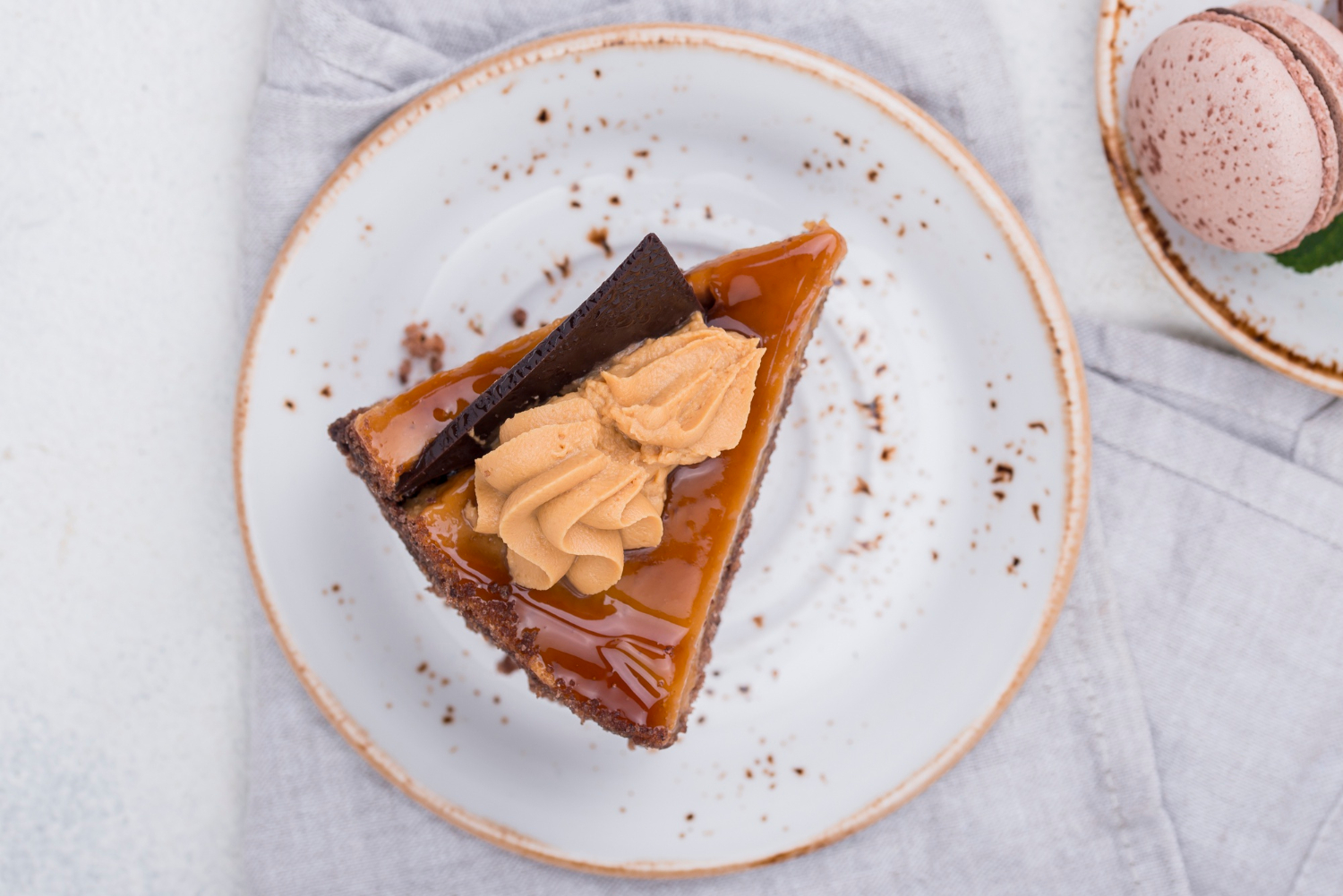
You can mix dulce de leche into the filling, swirl it through the batter or use it as a topping. Each choice changes the result.
Mixing it throughout gives the most even caramel flavor and also adds sugar and milk solids to the batter. A swirl creates pockets of stronger flavor while leaving part of the cheesecake tangier. A topping gives you the most control after baking because you can add a thin layer, drizzle individual slices or serve extra at the table.
For a first attempt, I like the last two approaches. They make it easier to taste the cheesecake itself.
The crust can help with balance as well. A plain graham-style base brings toastiness without adding another major flavor. If the filling already carries plenty of caramel, keep the crust lightly sweetened. Press it firmly enough to slice cleanly, then let it cool before adding the batter.
Keep the filling smooth by mixing less
Cheesecake batter does not need aggressive whipping. Start with softened cream cheese so you can blend it without chasing lumps. Add sugar and flavoring, then work in the eggs with minimal mixing once they enter the bowl.
Extra air expands during baking and contracts as the cake cools. That movement can contribute to cracks and a puffy texture. A crack does not ruin a cheesecake, of course. It simply changes the surface, and dulce de leche can cover it if presentation matters.
Eggs also make this a food-safety recipe. FDA guidance on safe handling of eggs recommends keeping eggs refrigerated and cooking foods containing eggs thoroughly.
Bake for texture, then let cooling do its work
A cheesecake continues to set as it cools. Pulling it only after the center becomes completely rigid can produce a dry, crumbly slice. Look for a set outer area and a center that still moves slightly when the pan moves.
Then slow down. Let the cake cool, refrigerate it thoroughly and wait to slice until the filling firms. A thin knife warmed in hot water and wiped between cuts helps produce cleaner portions.
If you want a chocolate note, use restraint. Our original The Cafe post remembered a little chocolate with the caramel. A narrow chocolate crust, a few curls or a light cocoa accent gives contrast without turning the dessert into chocolate cheesecake.
Finish with salt, acidity or texture
Dulce de leche can taste flat when every surrounding ingredient is equally sweet and soft. A small pinch of salt in the caramel sharpens it. Fresh berries add acidity. Toasted nuts or a crisp crumb bring a different texture.
Choose one direction and let it show. Piling several garnishes onto every slice usually hides the thing you made.
Cheesecake also belongs in the refrigerator. USDA food-safety basics advise keeping perishable foods cold and refrigerating them promptly.
The goal is a dessert that still has shape after the first few bites. Dulce de leche should deepen the cheesecake, while tang, salt and texture keep the plate from feeling monotonous.