


Lobster Mac and Cheese: How to Keep the Lobster in the Spotlight
Lobster mac and cheese can turn into a heavy casserole fast. The version we wrote about at Brix worked because the lobster still read as lobster beside pasta, cream, chorizo, vegetables and a Parmesan crust. For a home kitchen, the useful question is simpler: how do you build the comfort of mac and cheese without burying the seafood under sauce?
Start with the lobster, then size the sauce around it
Lobster has a delicate texture and a sweet, briny flavor. A thick cheese sauce can flatten both. I would start by deciding how much lobster you actually have, then make enough sauce to coat the pasta without leaving a deep pool in the baking dish.
Cooked lobster works well here because you can fold it in near the end. That limits extra heat exposure. If you start with raw seafood, follow a reliable safety reference and cook it appropriately; the USDA’s safe minimum temperature guidance gives 145°F for fish and shellfish.
Keep the lobster pieces large enough to notice. Tiny shreds disappear into the sauce and make every bite taste mostly of cheese.
Pasta shape matters too. Elbows are classic, though short tubes or shells can hold sauce without needing a heavier coating. Cook the pasta in well-salted water and stop before it becomes soft. It will keep absorbing moisture after you combine it with the sauce, especially if the dish goes into the oven.
Build a cheese sauce that still tastes like cheese
A roux-based sauce gives you control over thickness. Butter and flour create the base, milk loosens it, and cheese goes in after the sauce has thickened. Moderate heat matters here. High heat can make some cheeses separate, leaving grease on top and a grainy texture underneath.
Choose one cheese for body and another for sharper flavor if you like. Four cheeses sound impressive on a menu, yet the differences can vanish once cream, pasta and lobster enter the same bite. A small amount of mustard powder, black pepper or cayenne can sharpen the sauce without turning the dish into a spice project.
Salt late. Cheese, lobster and any cured add-ins already bring sodium.
Decide whether the oven is helping
Baking adds browning and a firmer top. It also keeps cooking the pasta and lobster. That tradeoff matters.
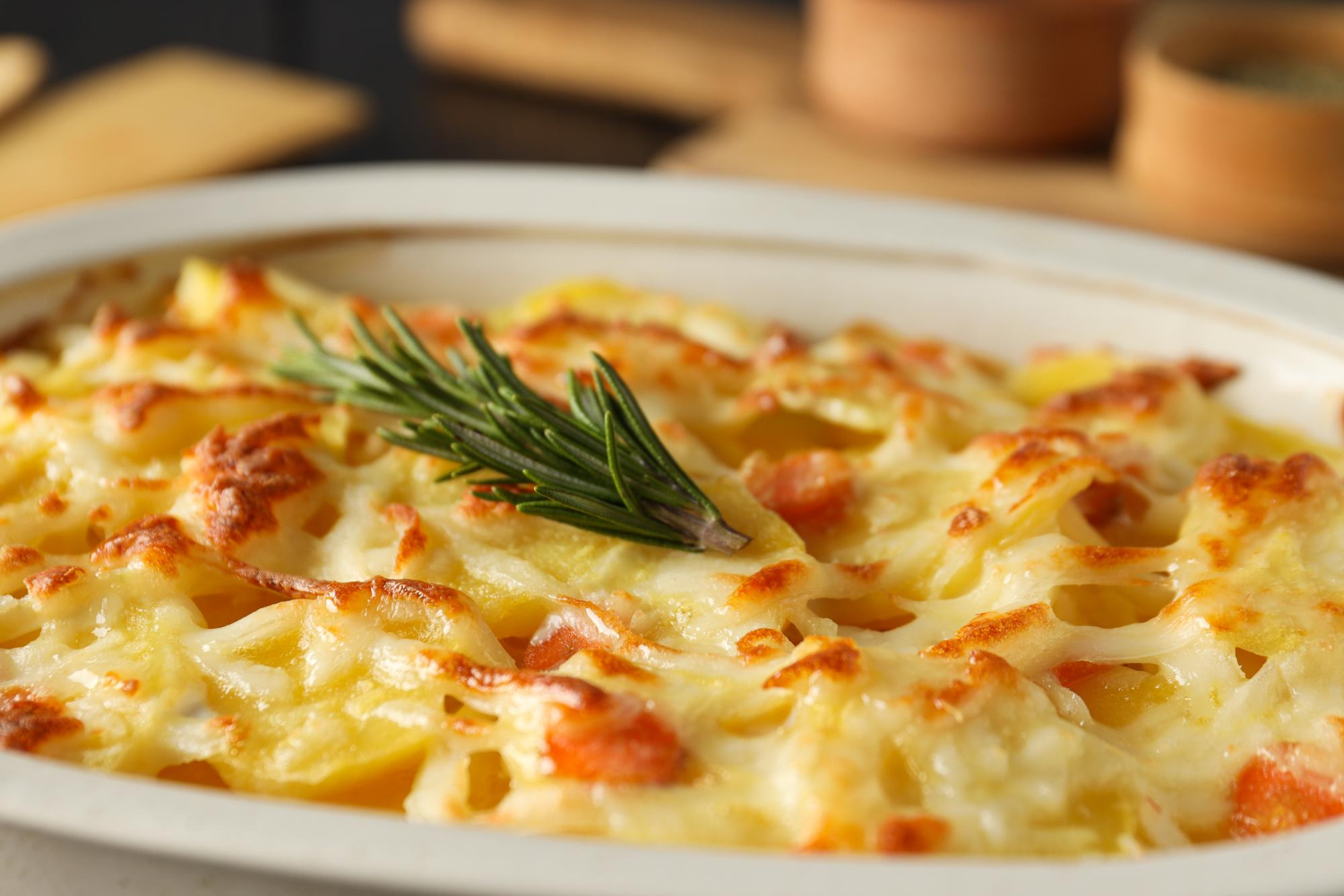
For a softer, stovetop-style dish, combine the hot pasta, sauce and lobster and serve it once everything reaches the same temperature. For a baked version, slightly undercook the pasta, use a sauce that looks a touch looser than the finished texture you want, then keep the oven time short. A thin breadcrumb or Parmesan topping can brown before the center dries out.
Our old Brix Restaurant Week post described lobster cream and a Parmesan crust. That combination still offers a useful lesson: richness works better when the seafood remains easy to find.
Treat leftovers like seafood, not desk food
Mac and cheese is easy to leave on the counter while everyone circles back for another scoop. Lobster changes the stakes. The USDA advises refrigerating perishable leftovers within two hours and using refrigerated leftovers within three to four days; its leftovers guidance covers cooling and reheating.
Reheat gently. A splash of milk can loosen a sauce that tightened in the refrigerator. Smaller portions also warm more evenly than a whole casserole.
The best version, for me, has a clear hierarchy. You taste lobster first, creamy pasta second, then the browned or spicy details around the edges. That keeps a rich dish interesting through the last forkful.